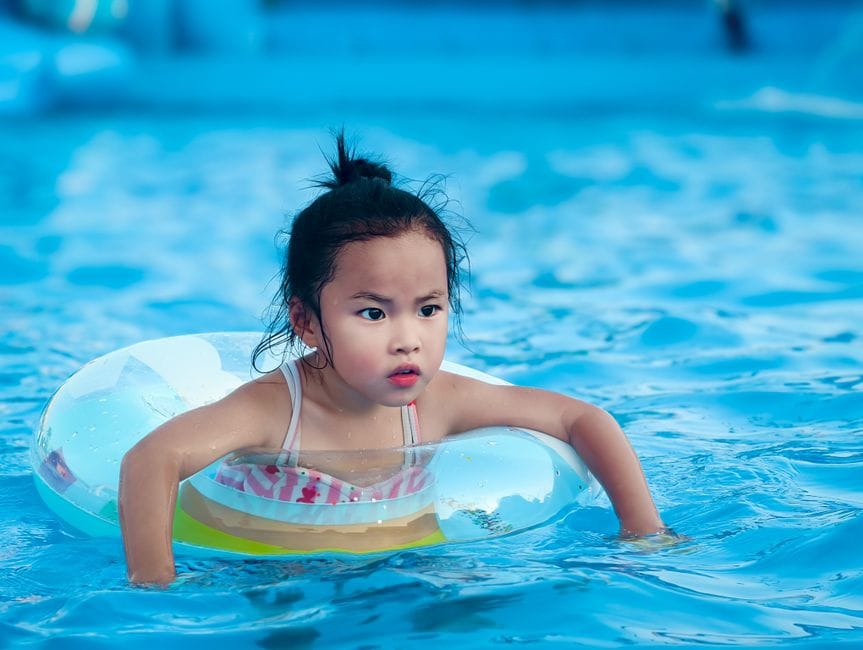
We waited too long to start formal swim lessons with our oldest, and I'll own that mistake plainly because it's a common one and it's worth saving someone else the regret. We figured he'd "pick it up" at the pool with friends, the way I sort of did as a kid, and by the time we put him in real lessons at seven he was scared of putting his face in the water and we had a year of catch-up to do. Drowning is the kind of thing you assume happens to other families until you understand how fast and silent it actually is.
The hard part to absorb is that drowning doesn't look like the splashing and yelling we picture from movies. It's quiet, it's quick — often under a minute — and it frequently happens with adults nearby who simply didn't recognize it. That single fact reorganized how I think about water entirely, and it's the reason swim skills and active supervision both matter and neither one replaces the other.
Start earlier than you think
Formal lessons can begin around age one, and there's no good reason to wait until elementary school.
Most local YMCAs and parks-and-rec programs run group lessons that are genuinely affordable, often in the range of $50 to $120 for a multi-week session, which is far cheaper than the private route. The American Academy of Pediatrics moved years ago to recommend lessons starting around age one for many kids, a shift from the older "wait until four" guidance. Earlier and steadier beats a panicked crash course the summer before camp, which is exactly the trap we fell into.
The layers that actually prevent the worst
- Designate a "water watcher" — one adult whose only job is eyes on the kids, phone away, no chatting, who hands off the role explicitly when they need a break.
- Proper-fitting Coast Guard-approved life jackets on open water, not the inflatable arm floaties that give everyone a false sense of safety.
- Teach the boring rules relentlessly: no running on the deck, never swim alone, ask before you get in. Repetition is the point.
Skills and supervision, never one or the other
The trap I see other parents fall into now is assuming that because a kid can swim, they no longer need watching, and that's exactly backwards. A confident swimmer who's tired, or in a current, or just being a goofy eight-year-old in a crowded pool, still needs an adult who is genuinely paying attention. Lessons lower the risk; they don't remove it, and treating them as a finish line is its own kind of danger.
If I could redo one thing, it would be starting the lessons at two instead of seven and being far more disciplined about the water-watcher rule at every barbecue and lake day. My younger two started at three, and the difference in their comfort and competence by age six is night and day. The lessons are an investment that pays off in something you can't get back if you're unlucky.