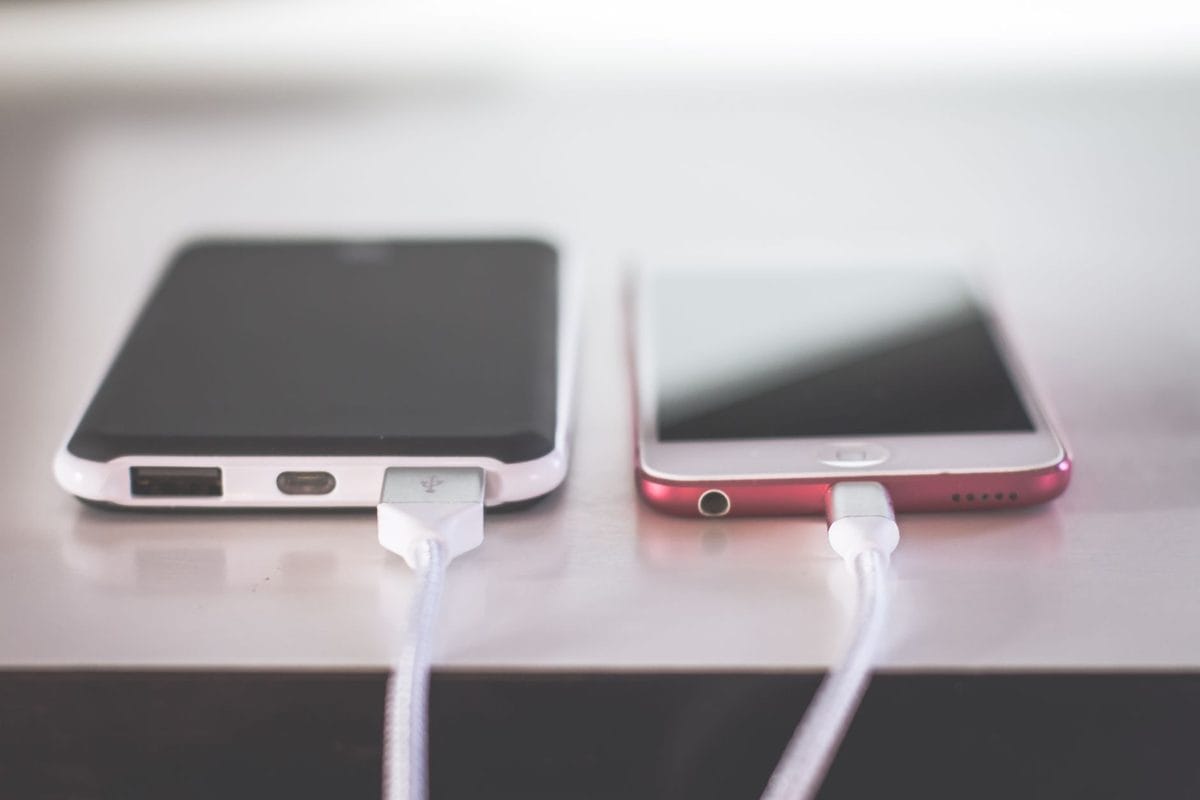
On a typical school night around 9:40, a house with kids quietly plugs itself in. A phone charges under a pillow, a school Chromebook sits on a comforter with its cord stretched across the bed, a game console dock rests on a couch cushion, and the hoverboard from last month's birthday is wired up in the front hall, six feet from the door everyone uses to leave. Nothing about that scene looks dangerous, and that is exactly why it deserves attention. Fire Prevention Week starts today and runs through October 10, and the National Fire Protection Association (NFPA) built this year's campaign, "Charge into Fire Safety: Safe Charging Is a Superpower," around the nightly routine in that picture. Phones, tablets, laptops, toys, scooters, e-bikes, and power tools all run on lithium-ion batteries, which store a lot of energy in a small space, and NFPA says a damaged battery or a wrong charge can make one overheat, start a fire, or even explode. Most parents already know October is the month to test the smoke alarms. Far fewer have looked at what is plugged in next to the bed.
What NFPA Is Telling Families This Year
NFPA is upfront about one gap: it does not yet track how many U.S. home fires involve lithium-ion batteries, so there is no tidy national number to quote. What it has is a rising pile of reports from fire departments and news outlets, and the association decided that was enough to build a week of public education around. The advice itself is refreshingly plain, and most of it costs nothing.
- Use the cord and charger that came with the device, or one the manufacturer approves. NFPA's slogan for this rule is "Cheap charger? Don't chance it."
- Charge on a hard, flat surface such as a table, desk, or bare floor. Beds, couches, and pillows trap heat and block airflow, and chargers get warm even when everything is working normally.
- Unplug the device once it is full.
- Stop using anything that gets very hot, swells, smells strange, leaks, smokes, or makes popping or hissing sounds.
- Charge big items like e-bikes, scooters, and power tools outside when possible, and never in a spot that blocks an exit (a sixth rule covers charging on planes, which matters if you are flying for the holidays).
A Ten-Minute Battery Census
Grab a laundry basket and walk through the house collecting everything that charges. Most families with kids own more rechargeable gear than anyone has ever counted: phones, tablets, school-issued Chromebooks, e-readers, earbud cases, handheld game systems, cordless vacuums, remote-control cars, light-up toys, and whatever is living in the garage. The point of the lap is not to confiscate anything. It is to match every charger to the device it belongs to, because the drawer of orphan cables is where the real risk hides.
Throw out any charger you cannot match to a device, and any gas-station or no-name replacement you bought in a pinch. The Consumer Product Safety Commission (CPSC), which investigated hoverboard incidents in detail for its April 2026 report on micromobility products, found aftermarket battery chargers mentioned in at least 10 of them. While you are holding each device, look for the quiet signs of a failing battery: a case that no longer closes flat, a screen lifting at the edge, a tablet that rocks on a level table. A swollen battery is not a "keep using it until it dies" situation. Retire it today.
Build a Charging Spot That Isn't a Bed
The safest charging spot in the house is a hard surface in a room where somebody is awake.
A kitchen counter works, and so does a hallway console or a desk in the family room. A shelf with a power strip is enough; you do not need a branded charging dock, though a multi-port station is handy when four people share one outlet. Look for a recognized testing-lab mark such as UL on the strip, and plug the strip straight into the wall rather than into another strip.
The obvious objection is overnight. NFPA says to unplug a device when it is full, and nobody is awake at 2 a.m. to do that. Newer phones have settings that slow charging as they approach 100 percent, which helps battery life, but nothing in NFPA's rules gives those settings a pass. The practical answer is to let devices spend the night in the kitchen instead of in bedrooms. That also happens to line up with the American Academy of Pediatrics, whose family media plan guidance suggests screen-free zones that include the time before bed. A teenager who objects that the phone is the alarm clock can have an inexpensive plain alarm clock on the nightstand instead, which is a fair trade.
Hoverboards, Scooters, and E-Bikes Play by Different Rules
These are the big batteries, and the numbers from CPSC are hard to shrug off. Its April 2026 report counts 17 hoverboard (self-balancing scooter) deaths from 2017 through 2024, with 11 of them tied to lithium-ion battery fires. In the agency's in-depth investigations of 197 hoverboard cases, 173 involved fire, smoke, or sparks, and 105 of those happened while the board was charging or just after it finished. E-bikes show the same pattern: fire was the hazard in 106 of 145 investigated incidents, and 62 of those fires started during charging. Hoverboards and scooters are also popular holiday gifts, so the habits you set now will matter when one arrives.
Charge these in the garage, on a shed floor, or on a porch, never in the front hall or at the bottom of the stairs. UL Standards & Engagement adds three rules worth taping to the wall: do not charge near an exit, do not leave the battery unattended or charging while everyone sleeps, and do not charge in extreme heat or cold. That last one matters in a cold garage come January, so check the manual's temperature range before you carry the scooter out there.
When you shop, look for a certification mark before you look at the price. UL 2272 covers the electrical system of hoverboards and scooters, UL 2849 covers e-bikes, and UL 2271 covers the battery packs. The UL 2272 test includes dropping the device from about a meter three times, a check designed to mimic how a child might handle it, and the device must not catch fire or leak. Skip the unbranded hoverboard from a marketplace seller with no certification, even if it is the cheapest listing on the page. Replacement batteries and chargers should come from the manufacturer for the same reason.
What to Do When a Battery Goes Bad
Teach every kid in the house a short rule: if something that charges feels hot, looks puffy, or smells funny, don't touch it and tell a grown-up. For adults, the response is to stop using the device and keep it off the charger. If it is smoking, hissing, or on fire, this is no longer a project. Everyone leaves, doors get closed on the way out because a closed door slows the spread of fire and smoke, and the 911 call happens from outside. NFPA's rule after that has no exceptions: once you are out, stay out.
Disposal is the part people get wrong. A swollen or damaged lithium-ion battery should never go into the trash, the recycling bin, or a regular drop-off box. The Battery Network, which runs the Call2Recycle program behind the drop-off bins at stores like Home Depot, says to isolate the battery right away, set it in a non-flammable material such as sand or kitty litter, and contact the manufacturer for instructions. Those store bins take undamaged rechargeables, up to 11 pounds and 300 watt-hours at Home Depot, which covers phones, tablets, and laptops but is a different category from a damaged battery.
Give the Kids the Clipboard, Then Test the Alarms
NFPA put out a "Family Power Check" activity for this week, and you can find it on the Fire Prevention Week page at nfpa.org. You do not need to print it to borrow the idea. Hand an eight-year-old a clipboard and let that child check each device: right charger, hard surface, unplugged when full. A kid handed the inspector's job will audit the adults first, which is a good way to catch the phone under your own pillow.
While everyone is in an inspecting mood, press the test button on every smoke alarm. NFPA says to test them monthly, to put alarms inside every bedroom, outside each sleeping area, and on every level including the basement, and to replace every alarm 10 years after its manufacture date, which is usually printed on the back. Then think about the sound itself. In a study at Nationwide Children's Hospital that tested 188 children ages 5 to 12, only 56 percent woke to a standard high-pitched tone alarm, compared with 85 to 89 percent who woke to voice alarms or a voice-plus-low-tone hybrid. The median time to escape was 96.5 seconds for the high-pitched tone and 12 to 13 seconds for the others. "Children are remarkably resistant to awakening by sound when asleep," said Dr. Mark Splaingard, a co-author. The catch is that this was a controlled sleep-lab study, not a house fire, but it is reason enough to choose a voice or low-frequency alarm for kids' rooms the next time one needs replacing.
NFPA says a fire can leave you as little as one or two minutes to get out once the alarm sounds, so the drill is worth ten minutes this weekend. Draw a floor plan with two ways out of every room, pick an outside meeting spot such as a mailbox or a neighbor's light post, and practice twice a year. For the first night drill, tell the kids at bedtime that it is coming; NFPA notes the goal is to practice, not to frighten anyone. If a child sleeps through the alarm, assign a grown-up to wake that child, and write it into the plan. And if a hoverboard is charging in the front hall tonight, that is the first thing to move.