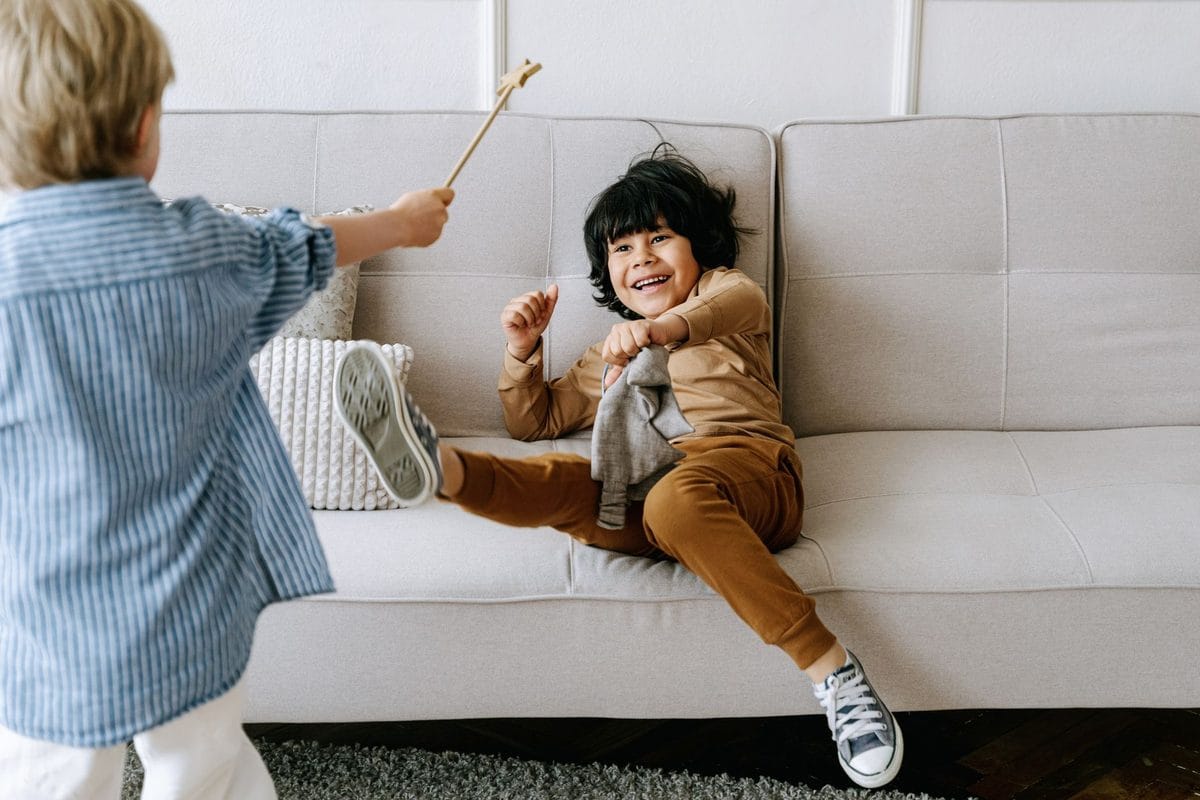
The bickering starts somewhere around the end of June. By the time the Fourth of July rolls around, your kids have been in each other's faces for three weeks straight, and the house has the emotional weather of a reality show. Who touched whose stuff. Who's hogging the tablet. Who got the bigger popsicle. If you've found yourself refereeing six fights before lunch and quietly wondering whether anyone would notice if you locked yourself in the car, you are not failing at summer. You're running into one of its most predictable features.
Why summer turns siblings into rivals
During the school year, kids get a built-in break from each other. Different classrooms, different friends, different schedules. They come home with their own news and their own day. Summer strips all of that away. Suddenly they're sharing the same square footage, the same parent, and the same eleven unstructured hours, every single day, with nobody else to absorb the friction.
It helps to remember that a lot of the fighting isn't really about the popsicle. It's about proximity. Two people who love each other and have run completely out of personal space will find something to fight over, and the something is almost beside the point. Once you stop trying to litigate every individual dispute as if it were a court case, the whole thing gets a little less exhausting.
Stop being the judge
The instinct, when two kids come storming in mid-argument, is to figure out who's right. Resist it. You almost never have the full story, and the second you hand down a verdict, you've taught both of them that the way to win is to get to you first with the better lawyer. The "he started it" arms race is something you build, one ruling at a time.
Try handing it back instead. "Sounds like you two have a problem. Come tell me what you decided." It feels like a cop-out the first few times. It isn't. Kids who are forced to negotiate, even badly, are building a skill that refereeing robs them of. You're not ignoring the fight. You're declining to be its supreme court.
The exception, and it matters: anything that's cruel or physical isn't a squabble to hand back. That's a clear line, and you hold it. But the endless low-grade bickering over fairness and turns? That's theirs to sort out, and they're more capable of it than the noise suggests.
Build in space on purpose
You wouldn't expect two adults to share a small apartment with no alone time for ten weeks and stay friendly. Kids are no different. The single most effective thing you can do is engineer separation before the friction builds, not after it explodes.
A quiet hour after lunch, in separate rooms, doing whatever they want as long as it's solo, resets the whole afternoon. Stagger a friend's house: send one kid out and the other one suddenly has you, the house, and a parent who isn't stretched three ways. Even sending them to different ends of the same backyard counts. The goal isn't to keep them apart all day. It's to make sure they're not on top of each other all day, which is a different and much more achievable thing.
What's actually going well
Here's the part that's easy to miss when you're knee-deep in it. Kids who fight a lot in summer are also getting something out of all that proximity. They're learning to read each other, to push and back off, to repair after a blow-up and be playing happily twenty minutes later in a way adults frankly can't manage. The same closeness that drives the fighting is what builds the bond. The two aren't separate. They're the same thing, viewed from your kitchen at the worst possible moment.
You don't have to enjoy the noise. Few parents do. But it helps to know that a summer with some sibling conflict in it isn't a broken summer. It's a normal one, and the kids slugging it out over the last popsicle today are, more often than not, the same two who'll be sprawled on the same couch laughing at the same dumb video by dinnertime. Hand back the small stuff, build in the space, hold the real lines, and let the rest run its course.