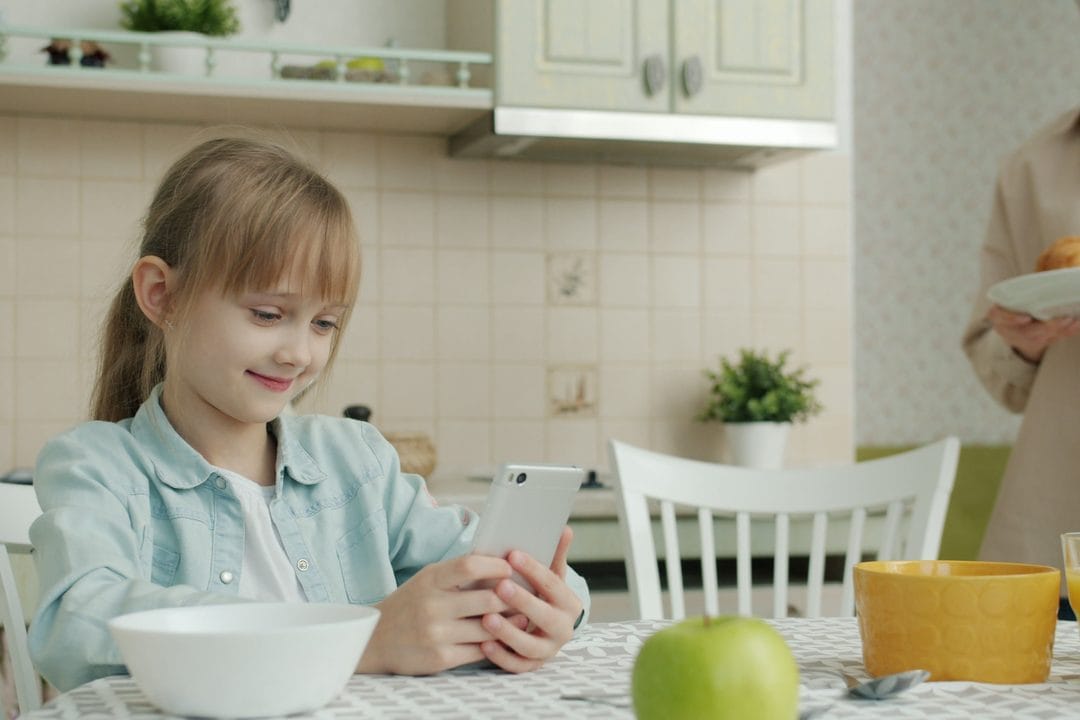
The first week back went fine. Backpacks were packed the night before, lunches got made, everyone showed up on time. Then homework started, and with it came the phone that "just needs to check one thing for class," the tablet that was supposed to be for a reading app, and the TV that somehow stays on through dinner prep. Summer screen habits don't disappear the moment school starts — they just collide with a schedule that no longer has room for them, and most families end up negotiating the same fight every single afternoon without ever sitting down to actually decide the rules.
Why the old rules stopped working
Summer screen time and school-year screen time are not the same problem, even though they look identical from the couch. In June, a kid can watch two hours of YouTube at 10 a.m. and still have the whole day ahead of them. In September, that same two hours eats into homework, dinner, showers, and the eight-to-ten hours of sleep a school-age kid actually needs to function the next day. The American Academy of Pediatrics has moved away from strict hour caps and toward a family media plan that accounts for what else is competing for the clock — and by late September, the thing competing is a 7 a.m. bus and a math worksheet due tomorrow.
Most families never formally reset anything. The iPad rules from July are still technically in effect in October, just ignored more and more as everyone gets tired of enforcing them. That's the gap worth closing first: not a stricter policy, but an honest one that matches the calendar you're actually living in right now.
Separate the school device from the fun device
If your kid does homework on a laptop, tablet, or Chromebook, that device needs a different set of rules than the one used for games and video. Blurring the two is where most of the daily arguments start, because "I'm doing homework" becomes a genuinely hard claim to verify from another room. A ten-year-old with a math worksheet open in one tab and Roblox open in another isn't lying, exactly — she's just doing what any of us would do with an unsupervised browser and forty minutes to kill. The fix isn't better trust, it's better setup. Once the two functions live on separate devices, or at least in separate accounts with separate app access, the daily negotiation over "are you actually working" mostly disappears, because there's nothing left to argue about. A few things make this concrete instead of theoretical:
- Homework devices stay in a common area — kitchen table, living room, not a bedroom with the door closed.
- Browser tabs get closed between assignments, not left open "for later," which is usually where fifteen minutes disappears into a game tab.
- If the school issues a Chromebook, check whether it has built-in content filtering already active (most districts run GoGuardian or Securly) before you buy a separate parental-control app that duplicates it.
- Entertainment apps get deleted from the school-issued device entirely, when the school's policy allows it — not just moved to a folder on the second screen.
Some schools lock this down already. If yours doesn't, the separation is on you to build, and it's worth doing in the first two weeks rather than after a report card shows the cost of not doing it.
Realistic limits by age, not by household rule
A blanket "one hour a day" rule sounds fair until you apply it to a six-year-old and a fourteen-year-old under the same roof, and it falls apart within a week because their actual needs, homework loads, and social lives are nothing alike.
Elementary school (roughly ages 5–10)
This age group generally doesn't need a personal phone yet, and recreational screen time works best capped around 30–60 minutes on school nights, used after homework and reading are done rather than before. Weekend limits can loosen — 1–2 hours is reasonable — but weekday mornings before school should stay screen-free entirely. A kid who starts the day on a tablet is a kid who's harder to get out the door, and that's before you factor in the meltdown when the screen gets taken away for the bus.
Middle school (roughly ages 11–13)
This is where phones start entering the picture, usually tied to after-school pickup logistics rather than a genuine need for social media. Give the phone a job — texting you when practice ends, checking in during a bus delay — and keep social apps off it for as long as you reasonably can. Common Sense Media's 2024 tracking put average daily screen use for this age group at over 5 hours when entertainment media is included, which is well past what most pediatricians consider workable alongside a full school and activity schedule.
High school (roughly ages 14–18)
Hard caps mostly stop working here, and trying to enforce one usually just teaches a teenager to hide their usage instead of managing it. What still works: no phones during dinner, no phones in bedrooms overnight (a charging station in the kitchen or hallway solves this without a single argument about trust), and an honest conversation about how much sleep is being lost to a phone under the pillow at midnight.
The friction is the point, not a sign you're doing it wrong
Every family that resets screen rules in September gets pushback. That's not evidence the plan is too strict — it's evidence the plan is actually changing something. Expect the first week to include some version of "everyone else's parents let them," and have an answer ready that isn't defensive. "I'm not everyone else's parent" works better than a debate about what's actually true in other households, because you can't verify it and neither can they. There will also be a version aimed at exhausting you rather than convincing you — the slow-motion negotiation over five extra minutes, repeated four nights running, until five minutes quietly becomes twenty. That one's worth naming out loud the first time it happens, because once a kid realizes the strategy has been spotted, it usually stops being worth the effort.
Where families lose the fight is inconsistency. If Tuesday's homework device rule gets waived because you're tired and it's easier to let the argument go, Wednesday's rule enforcement becomes ten times harder, because now it looks negotiable. Pick the two or three rules that actually matter most in your house — the homework-device separation, the dinner-table phone ban, the bedtime charging station — and hold those three without exception for the first month. Everything else can flex.
Weekday versus weekend: make the split explicit
Kids do better with a visible, predictable difference between school nights and weekends than with a single number applied every day. A physical chart on the fridge — even a simple one, even one a seven-year-old drew herself — does more work than a verbal rule repeated at dinner, because it removes you from the position of enforcer every single time and puts the rule itself in the room instead.
- Sunday through Thursday: recreational screens after homework, capped by age, off one hour before bedtime.
- Friday and Saturday: looser caps, later cutoffs, and — this matters — permission to actually say yes to a movie night without guilt.
- One screen-free family activity per week, whatever that looks like in your house: a walk, a board game, a Saturday morning at the farmers market.
The weekend flexibility isn't a loophole. It's what makes the weekday rules sustainable, because a kid who knows Saturday exists doesn't need to win every Tuesday-night argument.
What to skip entirely
Skip the screen-time app that promises to solve this for you. Apple's Screen Time and Google's Family Link are free, already installed, and do 90% of what a paid third-party app does — spending money on Bark or Qustodio only makes sense once you've actually outgrown the built-in tools, and most families never do. Skip the total ban, too, unless a specific app or account has caused a specific problem; an outright ban on a normal school night usually just pushes the behavior onto a friend's device at recess, where you have zero visibility at all.
And skip waiting for a "good time" to start this. There isn't one. The third week of September, with homework routines still wobbly and everyone a little worn down from the transition, is exactly when the reset needs to happen — not after Thanksgiving, when six more weeks of bad habits will have hardened into the new normal.