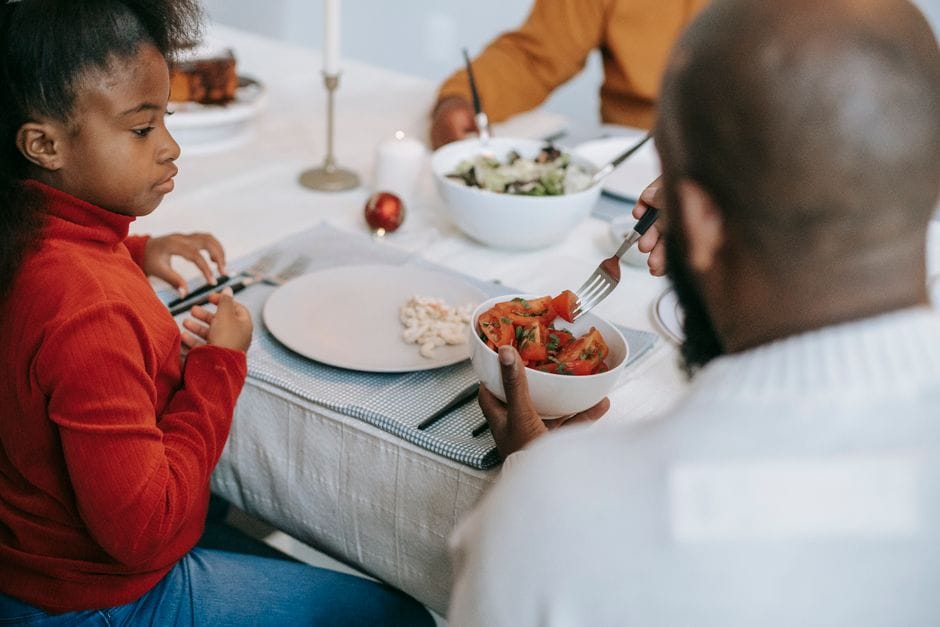
I spent years as a broken record about manners. "What do you say?" after every gift, "elbows off the table" at every dinner, "don't interrupt" roughly forty times an hour. The nagging produced compliance in the moment and nothing that lasted past my line of sight. The manners that actually stuck to my kids were the ones I never had to ask for, because they'd watched me do them ten thousand times.
Why nagging wears off
A reminder only works while you're in the room. The kid who says "please" because you prompted them learns to wait for the prompt, not to value the please. Manners prompted on demand are a performance for the parent, and performances stop the second the audience leaves. You want the manner wired in, not switched on by your voice.
And the nagging has a cost. A dinner table where every other sentence is a correction stops being a place anyone wants to sit, and you've traded a pleasant family meal for a kid who chews with technically correct posture and a grudge.
Let them hear you be polite to them
This was the shift that worked. I started saying "please pass the salt" to my own kids and "thank you for clearing your plate," treating them with the courtesy I kept demanding they show others. Kids extend to the world the manners they receive at home, and a kid who hears "please" and "thank you" directed at them all day starts handing it back out without being asked. Treat them like guests and they learn to be good ones.
The thank-you notes are the one place I still insist, and I do it by sitting down to write my own beside them — not by standing over them with a pen and a deadline.
Catch the good, ignore the small stuff
When my son thanked the mailman unprompted, I told him that night I'd noticed and that it was a classy thing to do. Praising the manner you saw works better than correcting the one you didn't, because kids drift toward whatever gets your attention. Pour the attention into the wins.
Some of the small battles aren't worth fighting at all. The elbows will come off the table eventually, probably around the time they care what a date thinks. I've stopped spending my dinner capital on it.