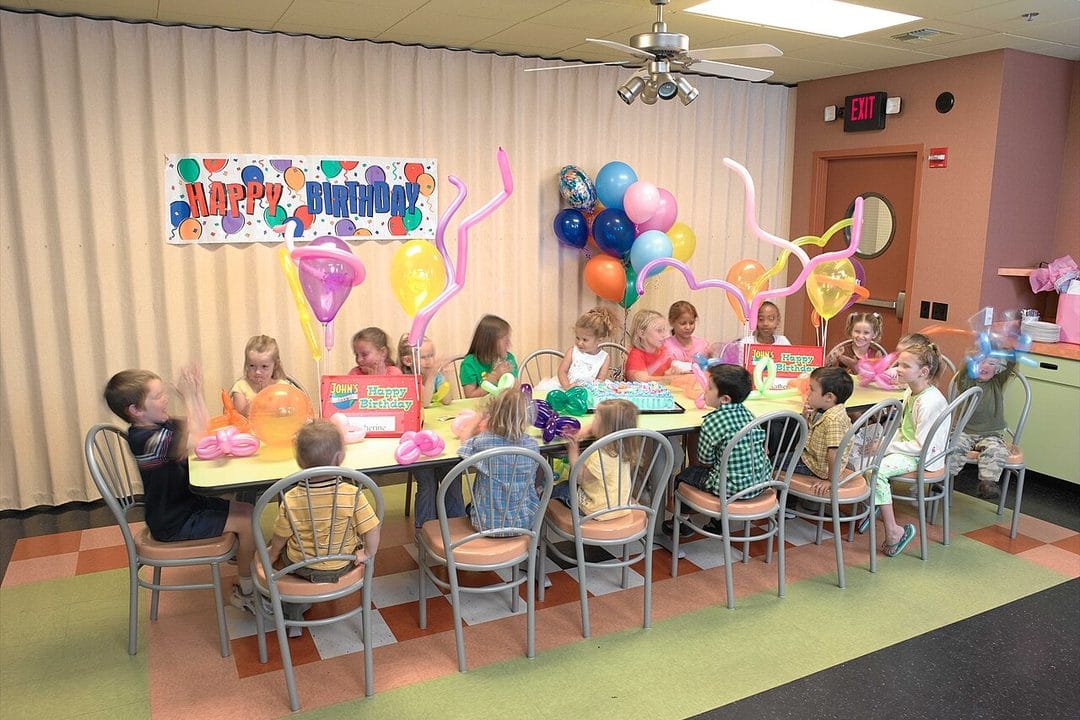
Somewhere around the third Pinterest board, you realize you've spent forty minutes picking a color palette for a party your five-year-old will forget by Tuesday, remembered mostly for the cake, the bounce house, and whether their best friend actually showed up. That's usually the moment to close the laptop and start over with a much shorter list: who's coming, what they'll eat, and where everyone will stand if it starts raining. Everything else is decoration, literally and otherwise.
What a Kids' Birthday Party Actually Costs
The internet will tell you a five-year-old's birthday needs a custom balloon arch, a hired photographer, and a themed dessert table with six kinds of pastel treats, and somewhere in that scroll the number $800 starts to feel normal. It isn't. A solid backyard party for 10 to 15 kids, including decorations, food, a sheet cake, and paper goods, typically runs $150 to $300, and most of that goes to food and cake rather than streamers. Venue parties cost more but buy back your afternoon: a package at a trampoline park like Sky Zone or an arcade like Chuck E. Cheese usually lands between $250 and $500 for a dozen kids, cake included, and somebody else handles the cleanup. Compare that to a from-scratch backyard bash where you're the caterer, the DJ, the referee, and the janitor, and the venue fee starts to look less like an indulgence and more like a fair trade for your Saturday. Either way, the number rarely needs to touch $800 unless you let a mood board talk you into it.
A backyard party sounds like the cheaper option, and on paper it usually is. It isn't always, though. Count the folding tables you don't own, the pop-up canopy for shade, the extra hour of setup and takedown, and a rained-out afternoon that sends fifteen kids into your living room, and the math tightens fast. Sometimes the $300 venue package is the actual bargain, not the fallback.
Picking a Venue That Matches the Kid, Not the Feed
Age matters more than theme when you're choosing where to hold this thing. A two- or three-year-old has no idea whether the party happens at a bounce house palace or in your living room with a stack of board books, so save the venue fee and put the money into a good cake and a nap-friendly schedule instead. Kids from about five through nine genuinely benefit from a structured venue, whether that's a trampoline park, a bowling alley, or the local children's museum, because they're old enough to want organized chaos but too young to entertain themselves for two hours in your backyard without a referee. By the tween years, the venue question flips again: an eleven-year-old would rather see a movie with four friends and grab pizza afterward than sit through a themed party with balloons, and pretending otherwise usually ends in a very unenthusiastic guest of honor.
How Long This Should Actually Last
Ninety minutes is the right length for a party with kids under six, and stretching it to three hours out of politeness just guarantees a meltdown around the two-hour mark, usually right after the sugar from the cake wears off. Elementary-age kids can hold two hours without much trouble, especially if there's a structured activity like a piñata or a scavenger hunt to anchor the middle of it, though the arrival window matters as much as the total length. Put a specific start and end time on the invitation instead of a vague afternoon window, because the parties that drag on are almost always the ones where nobody agreed on when it stops.
The Guest List Question Nobody Wants to Answer
Not the whole class.
Inviting an entire classroom of 24 kids because you don't want anyone to feel left out is the fastest way to double your budget and triple your stress, and most parents figure this out around the second party. A guest list of 8 to 12 kids is the sweet spot for a home party, small enough to manage without extra help, big enough that nobody notices if two families cancel at the last minute. Some schools do have an all-or-none rule for classroom invitations, meaning if you hand out invites on school grounds you either invite the whole class or none of it, so check with the teacher before you print anything. That rule exists for a reason: it stops a five-year-old from watching nineteen classmates open invitations while she gets nothing, and it's worth following even when it inflates your guest count and your grocery bill.
Food and Cake Without a 9 PM Grocery Run
Feeding a dozen kids doesn't require a caterer, and pretending it does is how party planning turns into a part-time job. Pizza remains the least controversial food on the planet for a reason: order two large pies from a local place or a Costco food court and you've fed 12 kids and a handful of parents for under $40. A quarter-sheet cake from Sam's Club or a grocery store bakery runs $18 to $25 and feeds 20 to 25 people, which is almost always more than you need, so a half-sheet is overkill unless the guest list is genuinely large. Skip the custom bakery order unless there's a specific reason to spend $75 on a cake. The better move is ordering pizza, buying the cake, and spending the money you saved on the venue or the piñata instead, because a box mix with store-bought frosting tastes exactly the same to a six-year-old, and there's no shame in admitting that. One thing worth asking on the invitation regardless of what you serve: whether any guest has a food allergy, since a peanut-butter-frosted cake at a party with an allergic seven-year-old turns a birthday into an emergency room visit.
Games Kids Actually Remember, Not the Ones Pinterest Loves
A piñata beats almost every organized game you can plan, and it costs $15 to $20 filled with a bag of mixed candy, cheap and chaotic, and it gives every kid a turn without anyone needing to understand the rules. Crafts sound like a good idea until twelve five-year-olds are fighting over the same glue stick, so if you go that route, keep the project to one simple thing and set it up in stations so nobody's waiting in line for scissors. The activities that actually get remembered a year later are rarely the elaborate ones. They're the piñata, the bounce house, and whoever's dad did the funny voice during the scavenger hunt.
- A $15–$20 piñata, filled with mixed candy, reliable chaos with no rules to explain.
- Musical chairs, which needs nothing but a speaker and one fewer chair than you have kids.
- One simple craft station instead of an open craft table, because twelve kids fighting over a glue stick is not an activity anyone enjoys.
- Freeze dance, a taped-up scavenger hunt around the yard, bubbles for the toddler siblings tagging along, and so on.
The Goodie Bag Question
Goodie bags are the single most skippable line item at a kids' party, and most parents overspend on them out of guilt rather than expectation. A bag stuffed with a plastic kazoo, three pieces of candy, a temporary tattoo, and a bouncy ball costs $4 to $6 per kid at a dollar store and ends up in the trash within a week, since kids barely remember what was inside by the car ride home. A better use of that same $50 to $70 is one good thing per kid instead of six cheap ones: a $5 paperback, a small building-block set from the dollar aisle, or a slice of the leftover cake wrapped to go. Some families skip the bag entirely and let the piñata candy double as the takeaway, which sounds cheap until you realize nobody has ever complained about it.