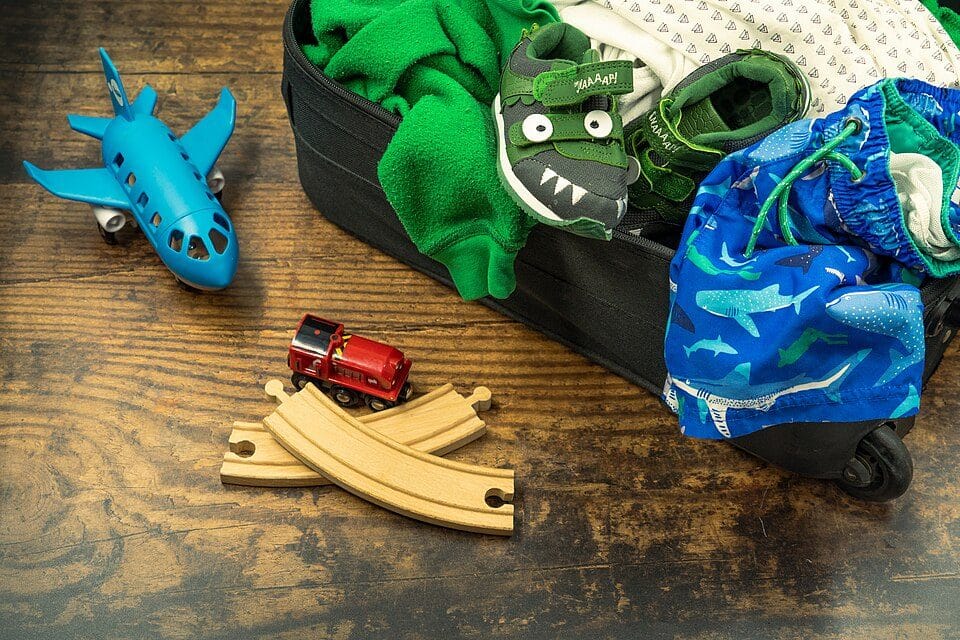
My neighbor spent forty-five minutes last week debating whether her son needed six pairs of socks or eight for a five-night camp session. Eight, she decided, just in case. Two days into camp, he'd lost the duffel bag's side pocket entirely, worn the same shirt twice without noticing, and was, by every account, having the time of his life. The socks were never the issue. They rarely are.
The packing list is not where this goes wrong
Every camp sends a packing list, and most parents treat it like a test they can fail. They can't, really — camps are built around the fact that ten-year-olds lose things, wear things twice, and generally do not notice they've been in the same socks since Tuesday. What actually matters is labeling everything with a permanent marker or iron-on label, including things you'd never think to label, like water bottle caps and the inside of hats, because those are exactly the pieces that end up in the lost-and-found bin nobody claims.
Skip the brand-new, expensive gear. A brand-new sleeping bag that gets muddy on day one is a source of stress for a kid who's already navigating being away from home; a slightly worn one from a sibling carries none of that pressure. The same goes for shoes — break them in before camp starts, not during it, because blisters on day two of a week-long session are miserable in a way that's entirely avoidable.
What actually earns a spot in the bag
- One item from home that smells like home — a pillowcase, not a stuffed animal that could get lost and become its own crisis.
- Pre-addressed, pre-stamped envelopes, because a kid who has to ask a counselor for a stamp usually just doesn't write.
- A cheap waterproof watch, if your camp doesn't allow phones — most don't, and for good reason.
- Sunscreen that's already been tested on their skin at home, not a new brand bought the week before.
Notice what's missing from that list: nothing electronic, nothing that requires charging, nothing expensive enough that losing it would matter. That's deliberate. The kids who struggle most at camp are often the ones most attached to a specific possession, and packing lighter — genuinely lighter, not just lighter on paper — tends to produce an easier week.
The call that ruins everyone's Tuesday
It usually comes on day two or three, right when the initial excitement has worn off and the routine hasn't set in yet. Your phone rings from an unknown number, or the camp calls you directly, and your child is crying and asking to come home. Every instinct you have will tell you to fix it immediately. Resist that instinct, at least for the first call.
Camp directors will tell you, almost universally, that most homesickness peaks around day two and is largely gone by day four — which is a real pattern, backed by decades of camp counselor experience, not just something people say to make parents feel better. The kids who get picked up during that dip almost never regret being picked up, but they also almost never get the chance to find out what day four would have felt like. That's the actual stakes of the phone call: not whether your child is unhappy right now — they probably are — but whether you take away their chance to work through it.
Here's the harder truth, though, and it's worth saying because most camp guides skip it: sometimes the kid on the phone really does need to come home. A homesick call on day two that resolves into normal camp life by day four looks completely different from a child who's still distressed on day five, who isn't eating, who counselors describe as withdrawn rather than just missing you. The advice to "stay strong and don't pick up" is good advice for the common case and genuinely bad advice for the exception. Ask the counselor directly, every time: is this typical homesickness, or does something feel different this time? A good camp will tell you honestly, because they don't want a miserable kid on their hands any more than you do.
What to say on the phone
Skip "I miss you too" as an opener — it validates the crisis rather than steadying it. Try something closer to: "I know this is hard right now. I believe you can get through today, and I'm not going to make a decision on the phone. Let's both check in with your counselor tomorrow." That's not cold. It's the version of support that treats your kid as capable of getting through something difficult, which, most of the time, they are.
Before the homesick call happens
- Ask the camp's policy on parent calls during a homesick episode — some actively discourage them because the calls themselves prolong the dip.
- Agree in advance, with your child, on a signal phrase they can use in a letter if things are genuinely not okay — not just "I miss you," but something specific you've discussed beforehand.
- Resist the urge to send care packages in the first 48 hours — they tend to reopen homesickness right as it's starting to fade.
What the counselors actually watch for
Most camps run a quiet check-in system for new campers that parents never see — a counselor noting at the end of day one, two, and three whether a kid is eating meals, joining activities, and talking to at least one other camper, even if they're still visibly sad at lights-out. That's the real signal, more than tears on the phone. A homesick kid who's still eating lunch and joining the afternoon swim is, by every camp director's account, a kid who's going to be fine by Thursday. A kid who's stopped eating or has pulled away from the group entirely is a different situation, and worth asking about directly rather than assuming the best.
The sibling left at home
It's easy to focus every ounce of attention on the child who's away and forget the one still standing in your kitchen, who's now watching you check your phone every hour for a camp update. Younger siblings often pick up on that anxiety faster than they let on, and a week that's stressful for you at home can leave them with an inflated, scary idea of what sleepaway camp is actually like — right before it's their turn to go. A short, calm explanation of what's normal at camp does double duty: it settles you, and it quietly sets expectations for whoever's next.
The counterintuitive part is that a rough first two days often predicts a great week, not a bad one — kids who cry on day two and stick it out frequently come home asking to go back next summer, sometimes the exact same kids whose parents were most tempted to pull the plug. The parents who wait it out don't get an easier week. They get a kid who found out, on their own, that they could handle being uncomfortable and homesick and still come out the other side wanting more.
None of that makes the wait easier for you back at home, checking your phone every hour for an update that isn't coming. That part doesn't get fixed by good advice. It just gets survived, the same way the homesickness does.