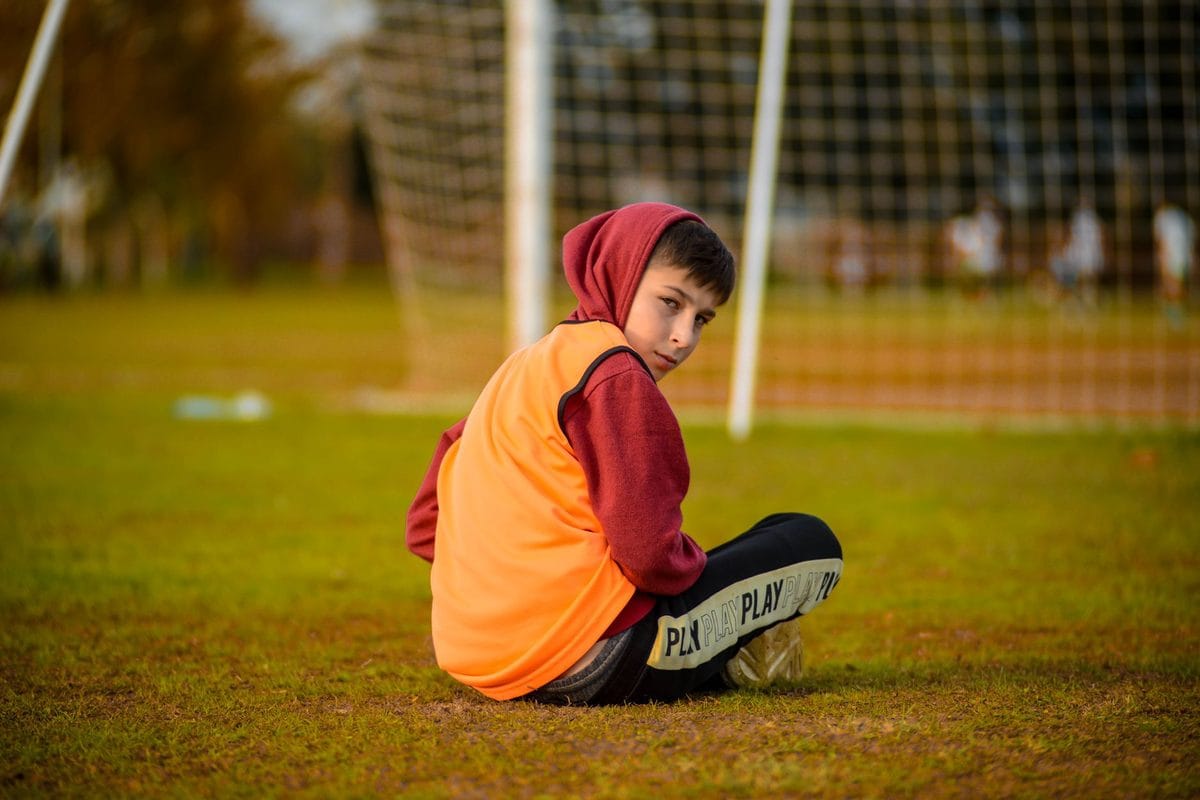
By the second week of September, the family calendar stops being a calendar and starts being a negotiation. Soccer practice runs Tuesday and Thursday at 5:30. Football is Monday, Wednesday, and games on Saturday morning. The middle schooler's cross-country meet is on a Tuesday this year instead of a Saturday, which nobody discovered until the schedule email went out in late August. Add two kids to that mix and a single parent car, and October stops looking like fall — it starts looking like a logistics problem with cleats. If you're the one holding the keys, you already know the feeling of standing in a parking lot at 5:25 doing math on which kid gets dropped where first.
The math nobody does in August
Most families sign up for fall sports in July or early August, back when the school year still felt theoretical and a Tuesday evening practice sounded perfectly manageable. Then September arrives with homework, a second kid's practice at an overlapping time, and a dinner that now has to happen at 8:15 instead of 6:00. The problem isn't usually the sport itself — it's that nobody sat down with two schedules side by side before signing the registration form and paying the fee. Recreational soccer or flag football through a city parks-and-rec league typically runs $75–$150 per child for an eight- to ten-week fall season, a number that's held fairly steady across most mid-size cities' parks and recreation fee schedules for the last several years. A travel or club team in the same sports runs $1,200–$2,500 or more once uniforms, tournament fees, and travel are added in, and the Aspen Institute's State of Play project has tracked that gap for years as part of its annual youth sports participation reporting. That price difference matters for the schedule, too. Club teams add weekday travel practices and weekend tournaments that a recreational league simply doesn't have, and a family that signs up for both a rec sport and a club sport in the same season is signing up for two different calendars that were never designed to fit together. Nobody explains that part at registration — the sign-up form asks for a jersey size, not a household time budget.
The one-day-off rule, and why it's worth following even when it's inconvenient
Youth sports medicine groups — the kind that treat the overuse injuries, not just cheer from the sideline — have converged on a rough rule of thumb: no more hours per week in organized, single-sport training than the child's age, and at least one full day off from any structured sport activity every week. The guideline is associated with groups like STOP Sports Injuries and echoed by orthopedic clinics that treat youth athletes year-round, and it exists because overuse injuries — stress fractures, tendinitis, the kind of shoulder and knee pain that shows up in a thirteen-year-old and used to be rare before that age — have climbed as club and travel schedules have gotten heavier. A ten-year-old, by that guideline, tops out around ten hours a week; a fourteen-year-old caps closer to fourteen. Most families blow past that number without noticing, because a single sport rarely looks like the problem in isolation. It's two practices plus a game plus a private skills session plus a scrimmage the coach added the week before playoffs, and each addition seemed reasonable on its own at the time it got added to the calendar. Track the actual hours for one week — write them down, don't estimate — before deciding whether the fall lineup is sustainable or just barely surviving on momentum.
Building a schedule that survives contact with reality
A shared family calendar app — Google Calendar, Cozi, or a plain whiteboard on the fridge — only works if every practice, game, and pickup time goes on it the day the season schedule is released, not the week before it's needed. Color-code by kid, not by sport; when two kids' calendars are stacked on top of each other in different colors, the conflicts jump out immediately instead of getting discovered at 5:25 on a Tuesday when both kids need to be at fields eleven minutes apart.
- Enter the full season schedule the day it's released, including away games and tournament weekends, not just the weekly practices.
- Build in a 20-minute buffer around every pickup and drop-off — fields run late, buses run early, and a schedule with zero slack breaks the first time either happens.
- Flag the weeks with double-headers, tournaments, or overlapping practice times in red before the season starts, because those are the weeks that need a carpool plan or a missed-practice decision made in advance, not in the parking lot.
- If a coach texts a schedule change, it goes on the calendar within the hour — the team group chat is not a substitute for the calendar, and "I thought someone else saw that text" is how a kid misses a practice.
Carpools that actually hold together
A carpool only works long-term if it has a real structure, not a loose "we'll figure it out" agreement made in the first week of the season. GoKid is the most established app built specifically for this — a group of parents sets a driving rotation, confirms pickups in real time, and sees who's actually driving on a given day, which removes the group-text guessing game that kills most informal carpools by week three. TeamSnap, the team-management app most rec and club leagues already use for rosters and schedules, has added its own carpool and RSVP tools too, so a team that's already on TeamSnap for game reminders doesn't need to layer on a second app just for driving logistics. The alternative that works just as well without an app: a shared spreadsheet with names and dates assigned two weeks out, so a parent who has a work trip or a doctor's appointment sees the conflict early enough to trade, not the night before.
Where carpools fall apart is uneven commitment — one family drives every week because they live closest to the field, and everyone else assumes that's just how it is. Name that out loud at the season's start and rotate by a fixed schedule instead of convenience, because "closest to the field" is not the same as "responsible for every Tuesday all season," and resentment over an unequal carpool tends to surface in October, right when everyone's most tired.
When to say no to a second sport
Not every kid needs two sports running at once, and admitting that out loud is harder than it should be.
Multi-sport kids are common and, by most youth development research, genuinely better off for it — early single-sport specialization is linked to higher injury rates and burnout, not better long-term outcomes, and organizations like the American Academy of Pediatrics and USA Football have both published guidance discouraging year-round single-sport play before high school. But multi-sport doesn't mean multi-sport-simultaneously. A kid playing fall soccer and starting a winter basketball skills clinic in the same September is not building athleticism — they're running two practice schedules through the same six weekday evenings, and something is going to lose: sleep, homework time, or the actual quality of attention they bring to either sport. That said, this isn't a universal rule — a kid who genuinely lights up at both practices and only shows fatigue when you ask directly, rather than volunteering it, is a legitimate exception, and cutting a sport that kid actually wants can do more damage than the packed schedule itself.
Here's the call most families are reluctant to make and shouldn't be: if signing up for a second fall activity means practices on more than four evenings a week, skip it this season. Not forever — just this fall. A kid who plays one sport well and has two open evenings for homework, downtime, and an actual dinner at the table is going to have a better season than one splitting attention across two schedules that were never designed to coexist. The kids rarely push back on this as hard as parents expect; it's usually the parent who feels like skipping an activity is closing a door, when in practice it's the difference between a season that works and one that limps to the finish line in November.
The weeks that need a plan in advance, not on the day
Tournament weekends and double-header weeks are where fall schedules actually break, and they're visible on the calendar months in advance — which means there's no excuse for scrambling when they arrive. Look at the season schedule the day it comes out and flag every week where two kids have overlapping games, where a tournament runs Saturday and Sunday, or where a practice conflicts with something already on the calendar, like a dentist appointment booked back in June.
- For overlapping games at different fields: decide now which parent covers which kid, or line up a trusted family who's willing to have your kid ride with them for that one game.
- Tournament weekends need the cooler and the folding chairs packed the night before, not the morning of — a 7:30 a.m. tournament check-in does not leave room for a missing cleat search.
- A practice that conflicts with something non-negotiable gets a heads-up to the coach by text or email in advance — not a no-show explained after the fact. Coaches plan lineups and drills around who's expected, and a two-day warning is a completely different thing to work around than a kid who just doesn't turn up.
None of this eliminates the chaos of a fall sports season — it just moves the decision-making out of the parking lot and into a quiet ten minutes on a Sunday night, which is the only version of this that actually holds up under pressure.
What the season actually needs to survive it
Skip the elaborate meal-prep system unless it's already part of the household routine — a crockpot dinner started at 7 a.m. and a stack of protein bars in the glove compartment cover more practice-night gaps than a color-coded meal plan most families abandon by the third week anyway. Keep a gym bag packed and by the door with a spare pair of socks, a water bottle, and snacks, because the mornings when a cleat goes missing are never the mornings anyone has ten extra minutes to look for it.
And build in the one thing that gets cut first when a season gets busy: an actual day with nothing on it. Sunday, most weeks, works for a lot of families — no practice, no game, no tournament, just whatever the household wants to do with an open afternoon. That's not indulgence; it's the one variable that keeps a packed fall schedule from turning into a season everyone is relieved to see end.