Texas schools start as early as August 11 this year, Georgia districts open around August 4, and by the time California and New York kids head back after Labor Day, most families in the South and Southwest are already three weeks into homework routines. That staggered calendar matters for your wallet: several states run sales-tax holidays timed to their own start dates, and the rules on what actually qualifies are narrower than most parents assume walking into Target with a supply list in hand.
Tax-free weekends: what actually qualifies
Texas's sales-tax holiday runs the first weekend of August and covers clothing and shoes under $100 per item, along with school supplies under $100 - but backpacks are capped separately at $100 each, and a laptop bought for a high schooler doesn't qualify at all in most years the holiday has run. Florida's back-to-school holiday typically stretches longer, often two full weeks, and includes the first $1,000 of a computer's price tag, which is the detail that catches families off guard when a $650 Chromebook rings up with tax anyway because the store's system miscoded it as an accessory rather than a computer.
Check your specific state's list before you shop, because the differences aren't cosmetic. A $45 pair of sneakers is tax-free in Texas but not automatically in a state like Missouri, where the per-item cap on clothing sits lower. It's a genuine saving when it applies - typically 6 to 8 percent depending on your local combined rate - but it's not the kind of saving worth driving across a county line for on a single backpack purchase.
What's worth buying new every year
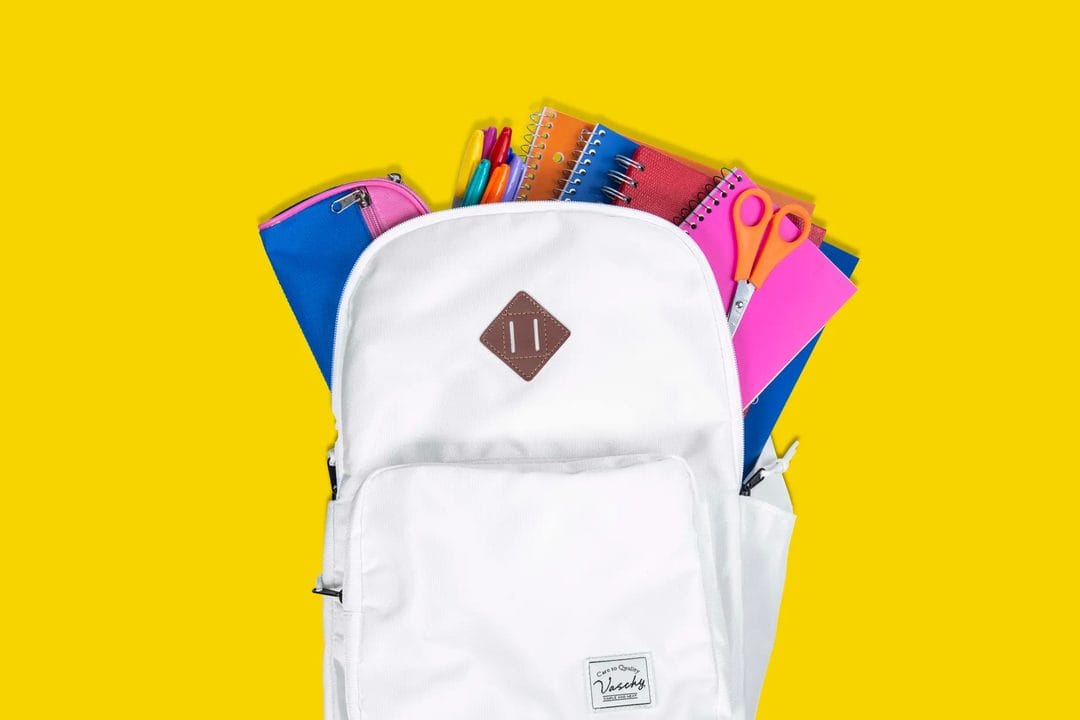
- Backpacks, once the zippers or straps show real wear - a $60 L.L.Bean or JanSport pack with a lifetime warranty is usually cheaper over three years than replacing a $20 one twice
- Underwear and socks, obviously, but also anything a kid has genuinely outgrown rather than just gotten tired of
- Consumables like glue sticks, pencils, and loose-leaf paper, since these get used up regardless of the brand
- And headphones, if last year's pair has a cracked band or a dead earbud, because kids use them for reading apps and testing software daily now, not just entertainment
Don't buy a new lunchbox just because the old one is scuffed. Scuffs don't affect function, and a $25 insulated lunch bag from last year still keeps a sandwich cold at noon exactly as well as it did in September. The place families genuinely overspend every August is novelty items - the trend-branded folder, the character-themed water bottle - which cost two or three times a plain version and get replaced within a semester anyway once the trend moves on.
Where used and hand-me-down actually make sense
Uniforms are the biggest opportunity most parents skip. Schools with uniform policies almost always run a used-uniform exchange through the PTA or front office, and a $35 polo shirt in good condition costs $8 to $12 secondhand - multiply that across five shirts and two pairs of pants for a growing seven-year-old, and the annual saving is real money, not a rounding error. Facebook Marketplace and local Buy Nothing groups have become the default channel for this in most suburban districts, often moving faster than the school's own exchange table.
Textbooks and required reading are another place to check before buying. Many middle and high schools now list required novels on the syllabus weeks before classes start, and a used copy from ThriftBooks or a library sale runs $3 to $6 versus $12 to $18 new - money that adds up fast across six classes' worth of assigned reading over a school year.
The supply list trap
Here's the part that catches new parents especially: the supply list a teacher sends home in July is often a wish list for the whole classroom, not a strict requirement for your one child. Many teachers ask for extra boxes of tissues, hand sanitizer, or a class set of markers specifically because school budgets for these items are thin, and families who can afford to contribute a bit more help cover kids whose families can't. That's a fine thing to do if your budget allows it - but it's not the same as your child needing four dozen pencils for personal use, and it's worth reading a supply list with that distinction in mind rather than buying everything listed at full price from the first store you walk into.
Bring last year's leftover supplies into this year's shopping trip before buying anything. A drawer check at home before you leave for Target usually turns up half a box of crayons, three unused notebooks, and a stapler nobody remembers buying - and every item found at home is one less item on the receipt.
Don't forget: fees beyond the supply list
The supply list is rarely the biggest back-to-school cost once fall activities start. Sports participation fees, band or orchestra instrument rentals, yearbook charges, and class field trip costs land separately throughout the semester, and they add up faster than a stack of notebooks ever will - a middle schooler in band plus one after-school sport can easily push a family's fall costs past $400 in fees alone, on top of everything bought in August. Districts vary widely on whether these are billed upfront or trickle in through the semester, so it's worth asking the school's front office in August what's coming rather than being surprised by an October invoice.
Fee waivers exist in most districts for families who qualify for free or reduced-price lunch, but they're rarely advertised beyond a line in the enrollment packet, and many eligible families simply don't apply because nobody tells them the option exists. If a household already qualifies for reduced-price meals, it's worth asking the school directly whether that same eligibility waives sports fees, instrument rental, or the technology fee some districts now charge for a school-issued Chromebook - the answer is often yes, but only if a parent asks.
Timing the big-ticket items
Laptops and tablets are where the real money is, and back-to-school pricing on these isn't always the best deal of the year despite the marketing push. Best Buy and Walmart both run deeper discounts on laptops during Black Friday than during back-to-school season, so unless a device is genuinely needed for the first day of school, a family replacing an aging laptop might do better waiting three months - assuming the current one limps along that long, which for many households it simply won't.
A backpack that survives three years costs less per year than one that survives one. The same logic applies almost everywhere on a school supply list once you start doing the per-year math instead of looking only at the price tag in front of you at checkout.
One last thing worth doing before the first day: sit down with last year's receipts, if you kept any, and note what actually got used versus what sat untouched in a drawer until June. Most families repeat the same over-purchases every August simply because nobody looked back at what worked - and that ten-minute review is the cheapest back-to-school tool of all, long before you set foot in a store.